Unfunded, Beat, Left for Dead
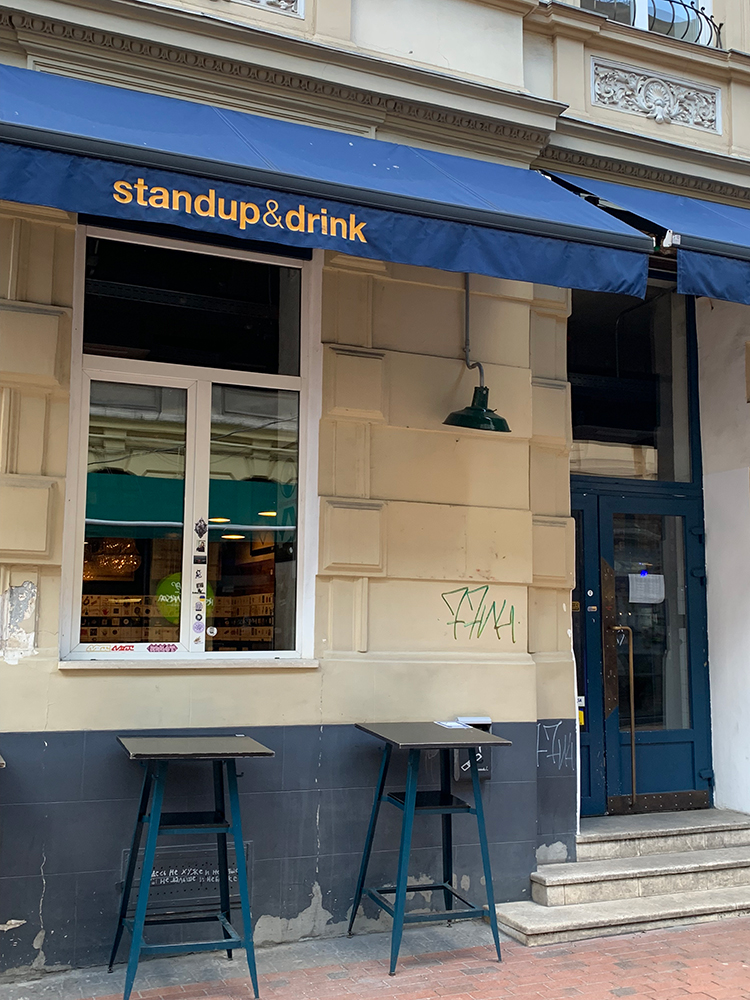
The RBT Project is not a funded project supported by a $25 million dollar budget while sitting in the cushy suede chairs of a seminary sipping chamomile tea next to a view of green landscapes. It is done without money, help, home, car, office space, all on a well-beaten, taped up iron stylus (laptop) at the very bottom of the social echelons using whatever free software and services I can find, in exile.
The RBT project took shape in coffee shops, bars, dump hostels, and not a few derelict places. The Gospels and the New Testament were put (back) together out of a backpack while trying to survive some of the worst sleep-depriving conditions imaginable in six different countries, after nearly all had shunned support or left me for dead. No sleep, no food, no home, no money. In fact, I’ve lived a vagabond’s life with no home for the last 29 years doing back-breaking work until the back broke. Unless you’re “a fortunate son,” that seems to be where honest, true-grit hard work gets you in the “land of opportunity” in the 21st century. Who knew?
Woe to the Rich
America, the land of my birth, has become a den of thieves, an excavated netherworld, a snare-laid wilderness where predators wait in every ordinary act. Buying, selling, driving, clicking, borrowing, subscribing, parking—yea, even joining a religion—can conceal another obligation ready to spring shut. This is an ambush culture, a lying-in-wait economy built on the backs of a population treated as cattle.

Marketing is no longer persuasion; it is psychological warfare. Choice architecture, framing, and perception arbitrage are studied, refined, and deployed against the people. A 2026 study confirms what the shrewd already knew: consumers notice price changes more readily than quantity or quality changes. That knowledge is weaponized. This generation talks a lot of “late-stage capitalism.” When I think of late-stage capitalism I think about things such as the new venture capitalist business models or schemes of politicians who can afford to spend billions just to destroy competition. Money itself is weaponized. The reality is, you’re just going to get a certain level of bloodshed and corruption you won’t find in countries where people can’t burn through billions to destroy opponents. Billions spent to turn you into merchandise to be trapped, bought and sold. How much of your personal data has been trafficked by social media already?
Tethering, as I have found out being reliant on this for hotspot use while being homeless, on plans from eSIM providers is a textbook example of the ambush: the plan is sold as usable data, the customer pays, then the moment the connection is shared the provider silently throttles it into uselessness. The fine print or “fair use” policy is the snare that springs only after the money has already been taken. You cannot even buy a cup of yogurt without being diminished—“with room for toppings” is now printed as a feature, as though giving you less is generosity. The small theft goes unnoticed, yet from such small thefts an entire nation is built. Somewhere the measure of winning became simply this: how much can be extracted, and at what cost to the one who cannot refuse.
Binding the Weak with Words the Weak Cannot Possibly Master
The moneyed class, who speak of themselves as “the money world,” have shaped a legal system of unprecedented scale to shield themselves while holding the rest of the nation in continuous hostage. Credit is the chain. Freedom is the word still spoken, yet the ordinary person walks through hundreds of binding legal relationships every day, entering new contractual traps dozens of times without ever lifting a pen. A 2008 Carnegie Mellon study calculated that reading every privacy policy an American internet user encounters would consume 244 hours a year—nearly forty minutes of every working day. That was almost twenty years ago. By 2024, the median privacy policy on major platforms had swollen to 4,150 words, roughly double the length of a decade prior. The moat widens. The chasm deepens.
Worse still is the new ambient contracting: consent is no longer given by signature but by mere presence. A 2023 Pew survey found that 56 percent of Americans almost always click “agree” without reading. Buying, driving, clicking, borrowing, working, banking, seeking care—even logging in or merely remaining present—extracts assent by fatigue. One study of seventy major digital services found that AT&T’s documents alone ran to roughly 383,000 words. This is not commerce. This is a system designed so that the strong may bind the weak with words the weak cannot possibly master.
Suppose two people encounter the same 40-page agreement. A person with money can buy the things that let them cross the legal complexity barrier:
- lawyers to read 100-page agreements
- accountants to find hidden tax consequences
- financial advisers to model long-term obligations
- compliance staff to monitor changing rules
- negotiators to alter one-sided terms
- software to track contracts and renewals
- time to actually read everything
The poor person may need a service immediately and can afford none of that. All classes can technically “choose,” but the cost of understanding the choice is radically unequal.
Add to this the quiet machinery of debt, the legal fiction that treats corporations as persons, and the relentless conversion of every human need into a revenue stream. The poor are ground to dust, the middle are bled, the rich are insulated, and the name of freedom is invoked over the whole arrangement. They multiply covenants they never intended the ordinary man to understand, and call the resulting captivity liberty.
You do not have to look hard to find the traps; they are laid at our feet from childhood. Even at the age of sixteen, I joined a local gym just to exercise. When I could no longer afford it, they told me I couldn’t cancel—I was obligated to keep paying or suffer heavy penalties. It was only when I discovered that minors cannot be legally bound by contracts and told them this that they promptly tore the paper up in front of me. As soon as you hit eighteen, an entire empire of these traps is waiting. From the moment I first moved out on my own in hopes of studying ski area business in Colorado, to accumulating debt for a degree at a far left college, to being rejected by every institution for employment after graduating because they were far-left, to resumes heavy with volunteerism somehow working against me, to businesses being obliterated by the National Forest, the US Customs and Border Control, the city and county halls, and the rest of state and local government ordinances, the walls were towering. Even the Unemployment Department was a travesty of traps. After calling me to inform me I was eligible during the COVID crisis as a self-employed mobile mechanic, and handing me around ten thousand in benefits for being out of work for over a year, almost two years later they demanded it all back because they “didn’t have everything well organized and weren’t able to look over individual cases.” It was a cheap attempt to undo their own mistakes, hoping people would give in and pay them back some money. I appealed and won, but not after being sorely, painfully, and unfairly pissed on, and still sentenced to pay them back $1800. I didn’t.
In my years trying to start a climbing and fitness gym and other businesses, I dove straight in and tried swimming across that moat without realizing what I was getting into (see my memoir below). Despite growing a clientele base and club of over 1,200 eager people over a painstaking seven years, I was blasted to oblivion by commercial real estate developers, zoning ordinances, predatory red tape, governmental “fees” (think $700,000 traffic impact fee) and real estate costs. The system wasn’t built to foster enterprise; it was built to protect the capital that was already there.
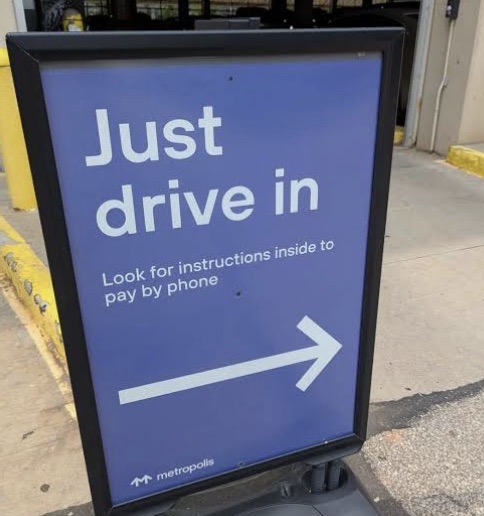
Even navigating a city has become an exercise in ambient extraction. As scores of unaware drivers have found out, companies like Metropolis “contract you” the second you simply drive into one of their garages. With no blockades, no pay machines, and minimal warning, their AI cameras ambush your personal data. I was robbed by them several times simply for using a Tesla charger, costing me several hundred dollars. Automated punishment without warning, due process, or arbitration. And all of it apparently legal, hidden behind a QR code that serves as the modern equivalent of illegible fine print.

“In God We Trust” is printed on the very notes that chain us. As it turns out, this god built a moat around itself and an ivory tower of inaccessible height. In the Book of Exodus, Pharaoh enslaved the Hebrews through a calculated strategy driven by political paranoia, incremental labor exploitation, and state-sanctioned violence. Egypt was an abusive state with magicians peddling a religion.
Sound familiar? America is that Egypt. It is full of task-masters beating down a working class who toil in the mud making bricks for the empire, bending over to a dehumanizing, insolent god. Egypt’s name in Hebrew, Mitzrayyim, translates to “Dual Siege” or “Dual Strait.” She besieges you from in front and behind: the past gets used against you, and the future gets built on top of you, squeezing every drop of life out of your being.
A Christian nation? What America does Christianity has been doing for a couple thousand years. The global “kingdom of God”, rather than dismantling this system, acts as its primary beneficiary making them the most complicit in this system of Hades. Christians globally earn something like $70 trillion annually, contribute over $1 trillion to the U.S. economy annually, own trillions in assets and property, and save governments billions via the “halo effect” of social safety nets and volunteerism. A harlotry without comparison.
Christians globally hold a massive share of private wealth, controlling personal assets on the order of $180–$250 trillion. If the world’s Christians were treated as a single sovereign economy, its GDP would be about 40% larger than the United States and China combined. Speaking of ambient contracting, costs of understanding, a system designed to bind the weak using words the weak could never understand, laying burdens on people too heavy to bear, while not lifting a finger, and dire consequences you only find out after being lured in…
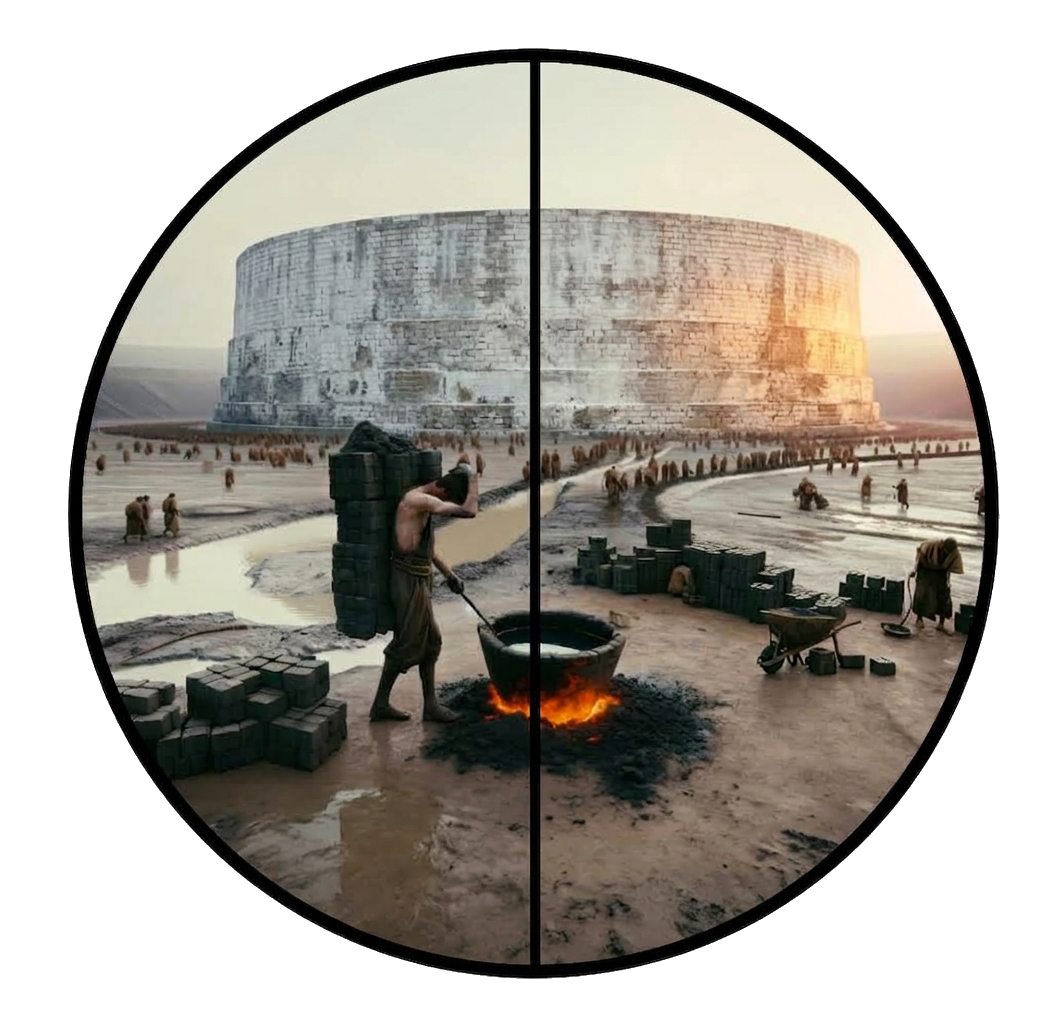
I tried to find freelance work as a “quant” programmer on Upwork just to eat, only to find a race to the bottom where Wall Street transients farm out cheap labor, undermining fledgling profiles and withholding pay without consequence. I lost thousands in labor. I tried driving for Uber 85 hours a week, sleeping in a car to save cash, only to find the system rigged like a casino slot machine. Drivers are forced into a psychological war of attrition, rejecting poverty-wage fares in hopes of winning the prize of a good-paying trip until fatigue sets in and the algorithm wins.
The Hertz rideshare (extraction) program was no better, leasing me a Tesla with 196,000 miles and a broken safety vision system. They had already extracted its full value in rental costs, yet they refused to sell it, preferring to milk desperate drivers at the expense of their own safety.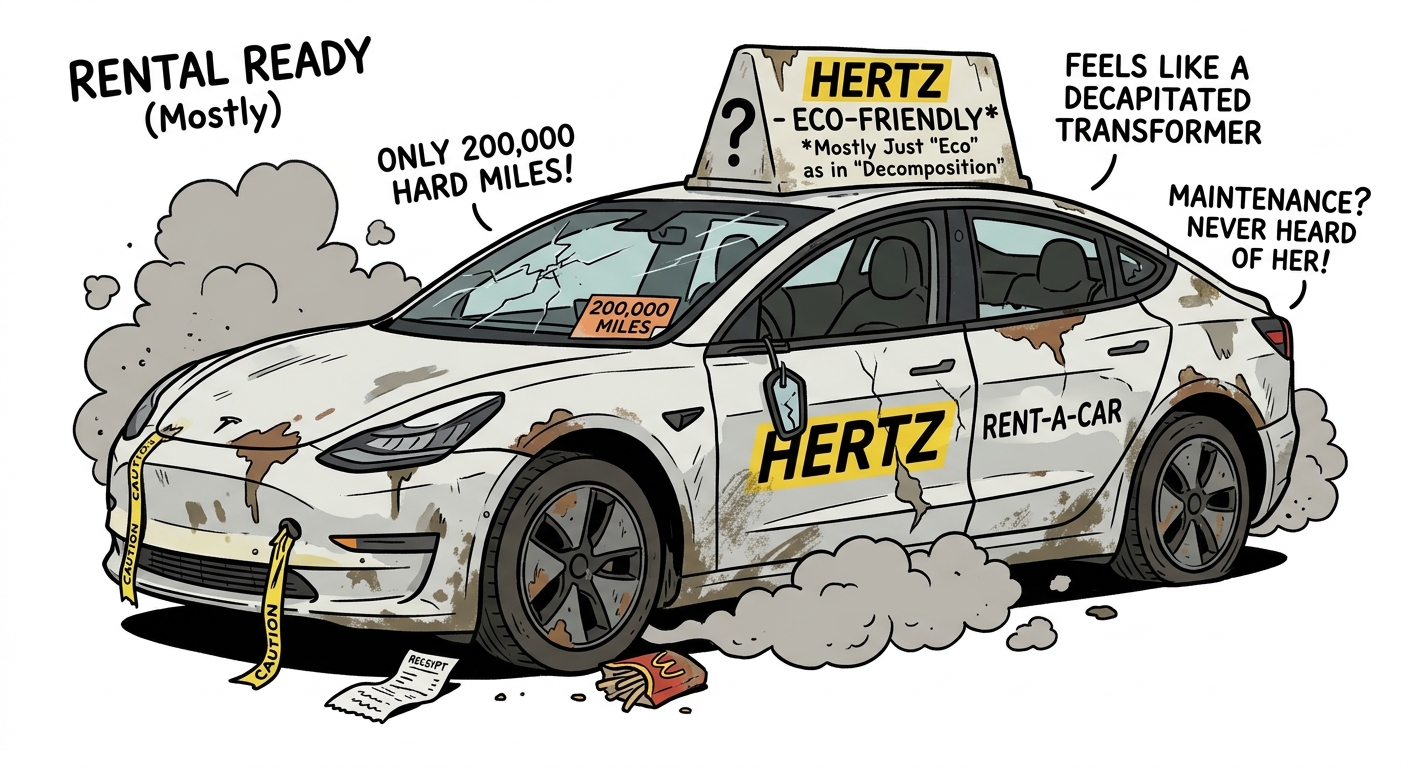
This survival is marginally doable if your passengers are hospitable as in Nashville, but try driving in the hostile, toll-ridden, AI-camera-hunted minefields of the East Coast where no one tips you and are quick to down rate you—Jersey, Philadelphia, Baltimore, DC, I tried them all. What I observed there was not the progressive promise of “diversity is our strength,” but a cynical perception arbitrage: the rich importing mass numbers of desperate laborers willing to sell their tomorrows for $6 an hour. I found zero blending of culture, backgrounds, language, or worldviews and a massive increase in racial competition. It keeps the working class divided and competing for scraps while widening the moat around the towers of the wealthy.
Few understand the crushing weight of this society unless they are at the bottom of it. The American economy and society is a tar pit, and the rule is simple: if you aren’t stepping on someone’s fingers on the ladder up out of it, the whole system will gladly step on yours.
All that said, I’m still translating, anyway, even if it takes me an excruciating amount of time to make a little progress. John, stuck alone on an island, exiled, treated like garbage, still finds a way to write a magnum opus.
Language of Man
Human language, considered the greatest human invention, is at the heart of human consciousness and intelligence, and is being used against humanity. That paradox lies at the very heart of human civilization: the tool forged to liberate human consciousness and build shared reality has been systematically re-engineered into the primary infrastructure of human captivity. Language evolved as a relational bridge—a way for two minds to transmit truth, coordinate survival, and cultivate empathy. But whenever power consolidates, language undergoes a phase shift: it stops being relational and becomes instrumental. It is no longer used to reveal reality, but to manufacture, obscure, and police it.
Yet the profound irony of language is that it remains the only tool capable of dismantling its own trap. Power can build an entire empire out of deceptive words, but the moment someone names the strategy clearly—stripping away the jargon to reveal the underlying extraction—the spell breaks. Language is currently being used as a leash, but it was forged as a sword.
Project Research Sources
The following resources are considered some of the most exhaustive for word research, though they have their limits:
- Gesenius: Hebrew & Chaldee (i.e. Aramaic) Lexicon (1846)
- Gesenius Hebrew Grammar, 1813
- Brown-Driver-Briggs Hebrew and English Lexicon (1906). Based upon the work of Gesenius.
- A Hebrew & Chaldee lexicon to the Old Testament by Fürst, Julius (1867), student of Gesenius.
- The Hebrew and Aramaic Lexicon of the Old Testament (HALOT) by Köhler, Ludwig, 1880-1956
- James Strong’s Exhaustive Concordance (1890)
- Dictionary of Targumim, Talmud and Midrashic Literature by Marcus Jastrow (1926)
- Tyndale House, Hebrew Roots https://www.2letterlookup.com/
Others Used:
- Septuagint (LXX) Interlinear Greek OT (https://studybible.info/interlinear/)
- Perseus Greek Digital Library (http://www.perseus.tufts.edu/hopper/)
- University of Chicago’s Logeion Greek Dictionaries (https://logeion.uchicago.edu/)
The BHSA from The Eep Talstra Centre for Bible and Computer was converted into a custom database to be used in the RBT Hebrew Interlinear which can be seen by clicking any verse number. This database is used for computational research of Hebrew words and letters via custom Python scripts, bypassing the need for expensive software.
יי
About Matt
The project is spearheaded by Matthew Pennock. His journey with Biblical Hebrew began in 2000 when he felt a strong draw to the language at 21 years of age. Keenly aware of its hidden power, he embarked on a comprehensive study, culminating in a full self-taught course in Hebrew grammar by 2002 utilizing various software and websites available at the time. Working as a ski-lift operator standing 10 hours a day, he would spend the otherwise boring times with no one around memorizing printed Hebrew Verb tables kept in his pocket. From 2000 to 2016, he dedicated himself to missionary work and church leadership, traveling to and ministering in over 50 countries. Abroad, he always seemed to find himself the least funded missionary on the field, often with scarcely $300 a month in support, most of the time with no support at all except for what he saved up on his own, and at one point was actually offered donations from Kenyans in Africa.
His thirst for knowledge extended to various other languages, including Arabic, Mandarin, Kiswahili, Spanish, German, Polish, and Biblical Greek. After obtaining a degree in International Studies, he pursued theological education at a Biblical seminary. However, the prohibitive costs and his dissatisfaction with the inconsistencies prompted him to leave the world of biblical academia after a few semesters. He had tested and participated in the murky waters of church-planting in countless capacities around the world, only to watch all of them fail. After countless churches shunned him as unconventional or otherwise rejected, or even reprimanded him as laissez-faire, he stepped away from the scene to focus on writing, and a deep dive/dig into Hebrew and Greek studies.
Subsequently, Matthew recognized the astonishing limitations and biases in translation methodologies. He resolved to delve exclusively into the study of Hebrew and Greek. By 2018, he was digging out and re-translating significant portions of text. This drive led to the inception of what was initially dubbed a “Full Literal Translation (FLT)” with the intention of testing the limits of literal translation of Hebrew etymology, as prior ones did not. This only created more questions and difficulties rather than solved them. Hitting impossible textual and philological challenges, he finally had to give up. That is, until one woman unexpectedly came along and handed him the key, as it were. Out of this the Real Bible Translation (RBT) Project was birthed.
Some music he enjoys includes Pearl Jam, AC/DC, Guns and Roses, Smashing Pumpkins, Led Zeppelin, drum ‘n bass, classic rock, and blues. He knows how to take apart an engine piece by piece to the nuts and bolts and put it back together again. He has enjoyed building motorcycles and vintage trucks, trail running and marathons, skiing, and rock climbing. He does not live anywhere, but roams abroad with no home, no money, no assets, translating everything entirely from an “iron stylus” laptop. He strives to leave everything in better shape than when he found it.
contact

Free and Open Source RBT
The RBT app and site is open source. Maybe you’d like to contribute or improve it!