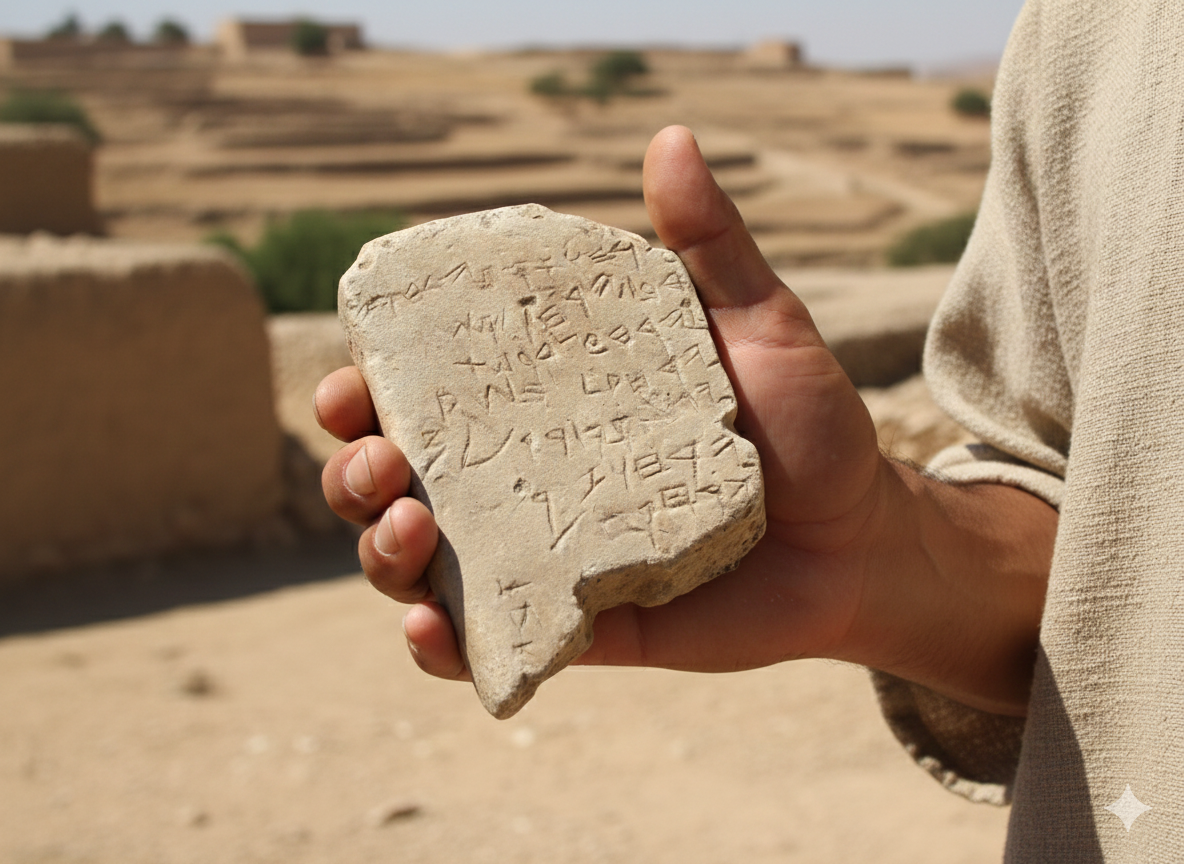
ירחו אסף
ירחו זרע
ירחו לקש
ירח עצד פשת
ירח קצר שערם
ירח קצר וכל
ירחו זמר
ירח קץ
1. A dual-moon, he gathered
2. A dual-moon, he sowed
3. A dual-moon, he gleaned the late crop
4. A moon, he scutched/cut flax
5. A moon, he reaped barley,
6. A moon, he reaped and he contained
7. A dual-moon, he pruned
8. A moon, he ended/cut off.
Father of Being (“Abi-jah”)
Notes
עצד is a rare word related to cutting flax, either with a scutching sword, or perhaps a flax cutting knife (which is curved like a sickle).
The Phoenician/early Canaanite spelling corresponds to the consonantal root שערם. In the Northwest Semitic abjad, this would be read exactly like the Hebrew שיערם: שׂ (shin) – ע (‘ayin) – ר (resh) – מ (mem), “their hair” or “their gate” It is unrelated to barley (שָׂעוֹרָה), which would be spelled differently ( in a corresponding Phoenician consonantal form). See Strong’s #8179 שַׁעַר gate.
וכל from the root כול and he contained. The most central semantic value of כול (H3557) is “to contain, to hold in,” with measuring being a derivative or secondary sense, not the basic one. In the lexicographical tradition, the primary idea is capaciousness or holding something within limits.
The Phoenician sequence corresponds consonantally to זמר (z-m-r). In Northwest Semitic, as in Biblical Hebrew, the root זמר primarily carries the sense of “to make music, sing, or play an instrument”. The root H2168 זָמַר is also a verb meaning “to trim or prune,” but specifically in the agricultural sense of pruning vines in a vineyard. Not sure this fits with “pruning sown crops.”
קץ as shortened from קיץ or קוּץ means verbally, “he ended/cut off” (reaping), as a noun קיץ summer fruit, or as past translations of Isaiah 18:6 render the word, “spend the summer” (וקץ עליו העיט)